
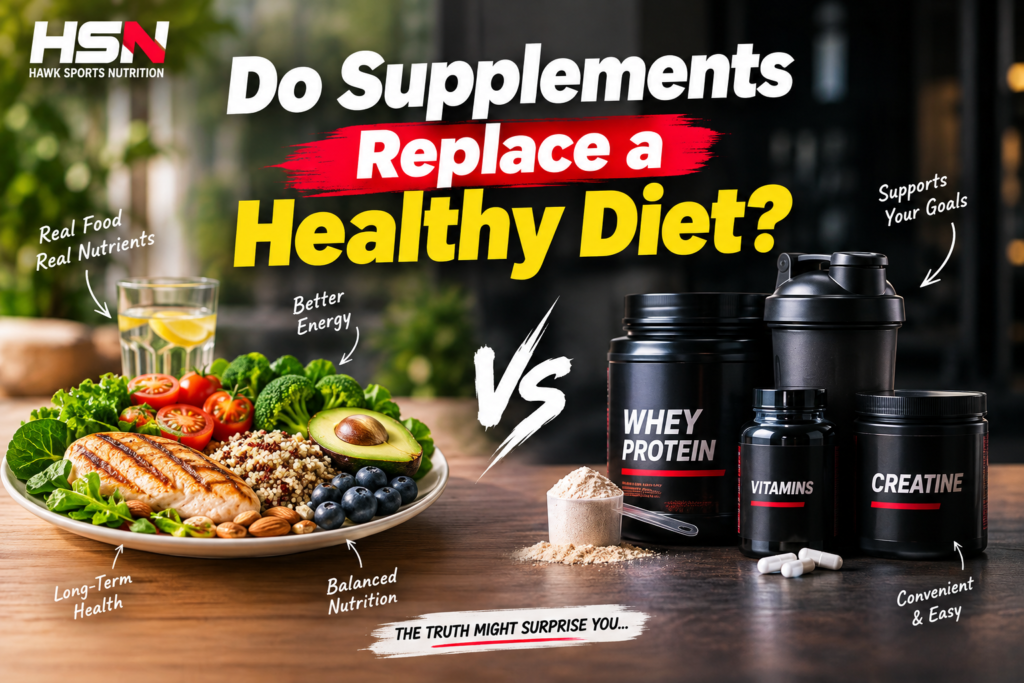
Supplements are products designed to provide nutrients such as protein, vitamins, minerals, amino acids, or other dietary ingredients. People commonly use them to fill nutritional gaps, support fitness goals, or meet increased nutrient needs.
Protein powder, creatine, multivitamins, vitamin D, and omega-3 supplements are some common examples. But Do Supplements Replace a Healthy Diet? In most cases, no. Supplements are intended to complement a nutritious eating pattern rather than replace it.
A healthy diet provides a combination of nutrients that is difficult to replicate with a single supplement. Whole foods such as fruits, vegetables, whole grains, pulses, dairy products, eggs, nuts, seeds, and lean meats provide protein, carbohydrates, healthy fats, vitamins, minerals, fiber, and other naturally occurring compounds.
For example, fruits and vegetables are important sources of dietary fiber and micronutrients, while legumes and whole grains can provide both carbohydrates and plant-based protein.
So, Do Supplements Replace a Healthy Diet when someone is trying to improve their overall nutrition? They generally should not. A protein shake can conveniently increase protein intake, but it does not provide the same variety of nutrients and fiber as a balanced meal containing foods such as vegetables, whole grains, and legumes.
Similarly, a multivitamin can provide selected vitamins and minerals, but it cannot reproduce the complete nutritional profile of whole foods.
The World Health Organization recommends that people aged over 10 consume at least 400 grams of fruits and vegetables per day, highlighting the importance of plant foods in a healthy eating pattern. This illustrates why food quality and variety remain central to good nutrition.
There are situations where supplements can be useful. Someone with a diagnosed nutrient deficiency, a restricted diet, or increased nutritional requirements may need a specific supplement under appropriate professional guidance.
Athletes and gym-goers may also use products such as protein or creatine for specific training goals.
Ultimately, Do Supplements Replace a Healthy Diet is less about choosing supplements or food and more about understanding their different roles.
A balanced diet should form the foundation, while supplements can be used strategically when there is a genuine nutritional or performance-related reason.
Let’s study this with Hawksportsnutrition
What Is a Healthy Diet and Supplements?
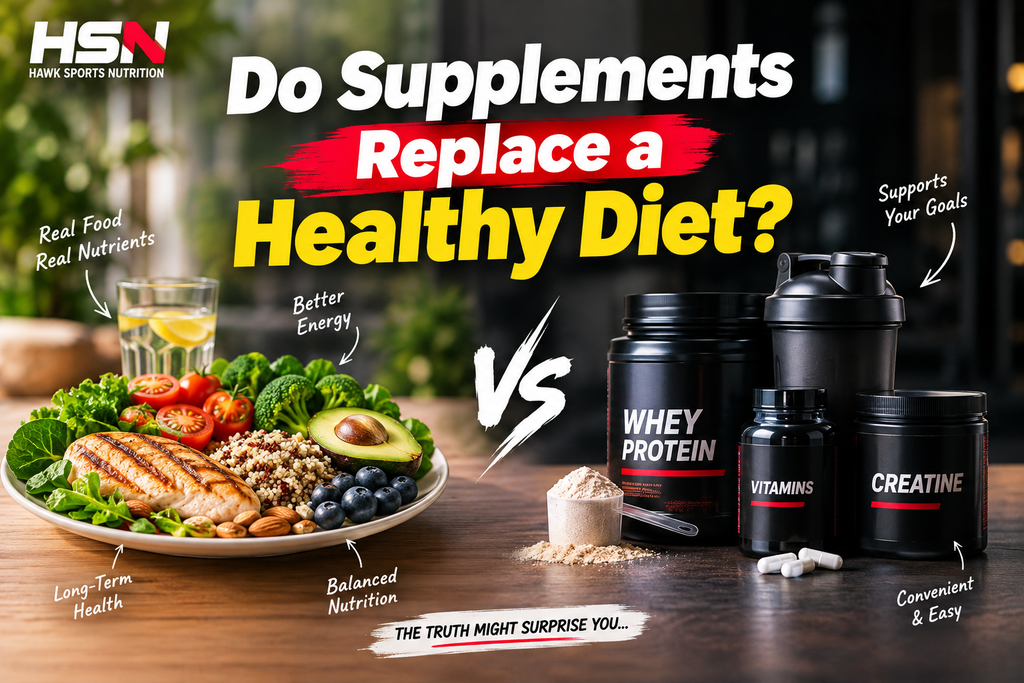
A healthy diet means regularly eating a variety of foods that provide the nutrients your body needs for energy, growth, recovery, and normal body functions.
A balanced diet typically includes protein, carbohydrates, healthy fats, vitamins, minerals, fiber, and plenty of nutrient-rich foods. Supplements, on the other hand, are concentrated sources of particular nutrients or other dietary ingredients, such as protein powder, creatine, vitamin D, iron, or omega-3s. This distinction is important when asking, Do Supplements Replace a Healthy Diet?
Understanding the Difference
Whole foods provide several nutrients together. For example, eggs and dairy can provide protein and minerals, while fruits and vegetables supply vitamins, minerals, fiber, and beneficial plant compounds
. Whole grains such as oats and brown rice provide carbohydrates, fiber, and various micronutrients.
Healthy fats can come from foods such as nuts, seeds, avocados, and fish.
Supplements are more targeted. A protein powder can make it easier to increase daily protein intake, while a specific vitamin or mineral supplement may help address a nutritional deficiency.
However, supplements generally provide a narrower range of nutrients than a varied diet. Therefore, Do Supplements Replace a Healthy Diet? They are better understood as an addition to an already nutritious eating pattern.
How Healthy Diet and Supplements Work Together
The combination of healthy diet and supplements can be useful when supplements serve a specific purpose.
For example, someone who struggles to consume enough protein through regular meals may use a protein shake as a convenient option after training or during a busy day.
Similarly, a healthcare professional may recommend a particular vitamin or mineral when dietary intake is insufficient or a deficiency has been identified.
According to the World Health Organization, people over 10 should aim for at least 400 grams of fruits and vegetables per day, demonstrating the importance of whole foods in everyday nutrition.
Supplements cannot replace the variety and dietary fiber supplied by fruits, vegetables, whole grains, legumes, nuts, and other foods.
For people interested in fitness, the basic approach remains simple: build meals around nutritious foods and use supplements according to individual needs.
Understanding Do Supplements Replace a Healthy Diet helps keep expectations realistic—supplements can support nutrition, but a diverse and balanced diet remains the foundation of healthy eating.
Can Supplements Replace Food?
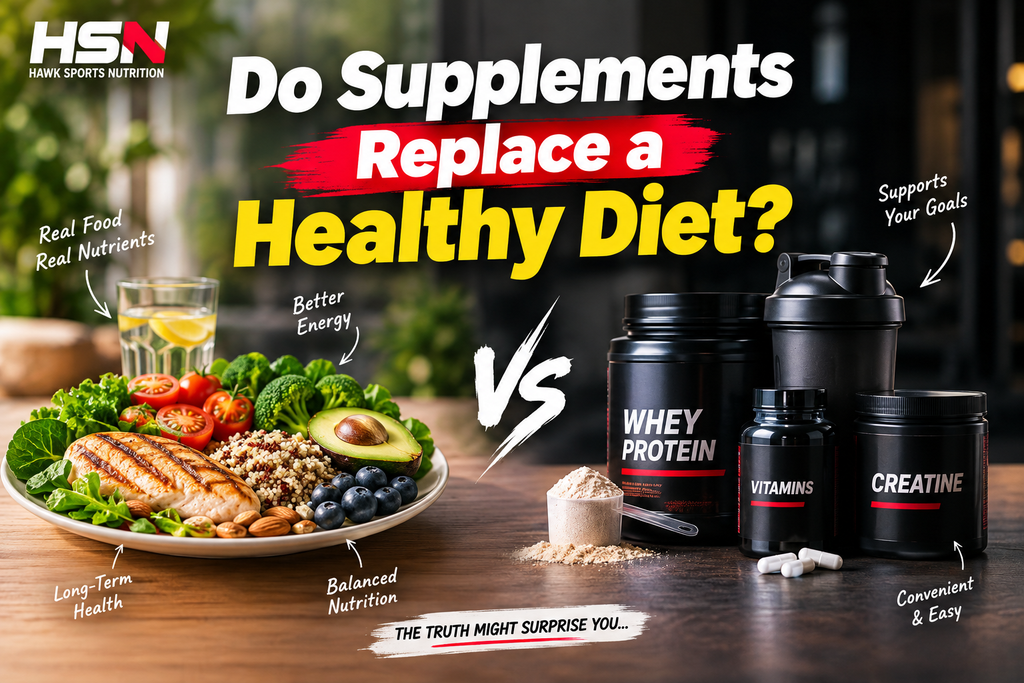
A common question among gym-goers and health-conscious people is, can supplements replace food? The simple answer is generally no.
Supplements can provide specific nutrients in a convenient form, but they are not designed to completely replace a varied, balanced diet.
When considering Do Supplements Replace a Healthy Diet, it is important to understand that food provides much more than isolated nutrients.
Why Whole Foods Matter
Whole foods contain a combination of protein, carbohydrates, healthy fats, vitamins, minerals, fiber, and naturally occurring compounds that work together as part of an overall diet.
Fruits and vegetables, for example, provide fiber along with vitamins, minerals, and numerous plant compounds.
Whole grains such as oats and brown rice provide carbohydrates and fiber, while foods such as beans, eggs, dairy, fish, nuts, and seeds can provide protein and other essential nutrients.
Dietary fiber is particularly important because it supports normal digestive function and can contribute to feelings of fullness.
Most protein powders and many vitamin supplements contain little or no fiber. This is one reason they cannot provide the same nutritional role as a meal made from whole foods.
Food vs. Protein Powder
Consider a meal containing eggs, whole-grain toast, vegetables, and fruit. It can provide protein, carbohydrates, fats, fiber, vitamins, and minerals in one meal.
A protein shake, in contrast, is primarily a convenient way to increase protein intake.
It can be useful after exercise or when getting enough protein from meals is difficult, but it does not necessarily provide the same variety of nutrients.
Food vs. Multivitamins
A multivitamin can supply selected vitamins and minerals in measured amounts, but it does not provide the protein, carbohydrates, healthy fats, fiber, and calories found in a balanced meal.
The same principle applies to other targeted supplements: they generally address particular nutritional needs rather than providing complete nutrition.
So, Do Supplements Replace a Healthy Diet? For most people, supplements should complement—not replace—nutritious foods.
The right approach is to make whole foods the foundation of daily eating and use supplements when there is a specific nutritional, medical, or fitness-related reason.
Understanding Do Supplements Replace a Healthy Diet can help people make more informed choices and avoid treating supplements as a substitute for proper meals.
Supplements vs Healthy Diet: What Is the Difference?
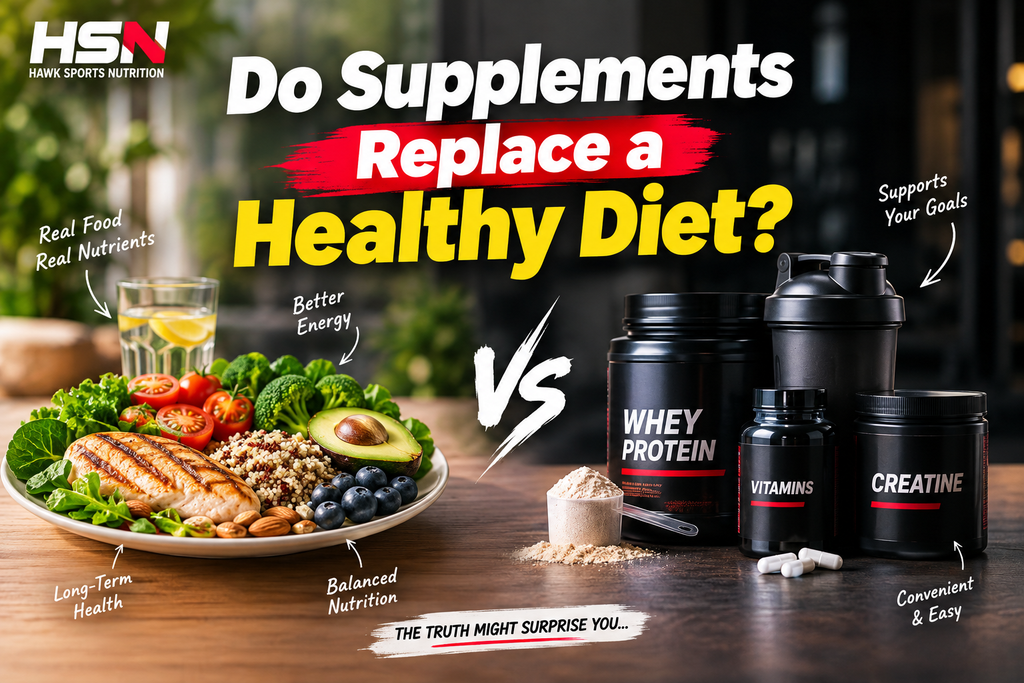
When comparing supplements vs healthy diet, it is important to understand that they serve different purposes.
A balanced diet provides a broad range of nutrients through foods such as vegetables, fruits, whole grains, pulses, dairy, eggs, fish, nuts, and seeds.
Supplements provide concentrated amounts of specific nutrients or ingredients, such as protein, creatine, vitamins, or minerals.
This is why the question Do Supplements Replace a Healthy Diet should be considered in terms of their different roles rather than treating them as interchangeable.
Advantages and Limitations
A healthy diet has the advantage of providing multiple nutrients together, including protein, carbohydrates, healthy fats, vitamins, minerals, and dietary fiber.
Whole foods also offer a variety of naturally occurring compounds that may not be present in a supplement.
The limitation is that preparing balanced meals and consistently meeting specific nutritional requirements can sometimes be difficult, particularly for people with busy schedules or restricted diets.
Supplements offer convenience and can help people meet particular nutritional targets.
For example, protein powder can make it easier to increase protein intake, while a specific vitamin or mineral supplement may be appropriate when dietary intake is inadequate or a deficiency has been identified
. However, supplements are usually more limited in nutritional variety and cannot reproduce everything found in a diverse diet.
When Can Supplements Be Useful?
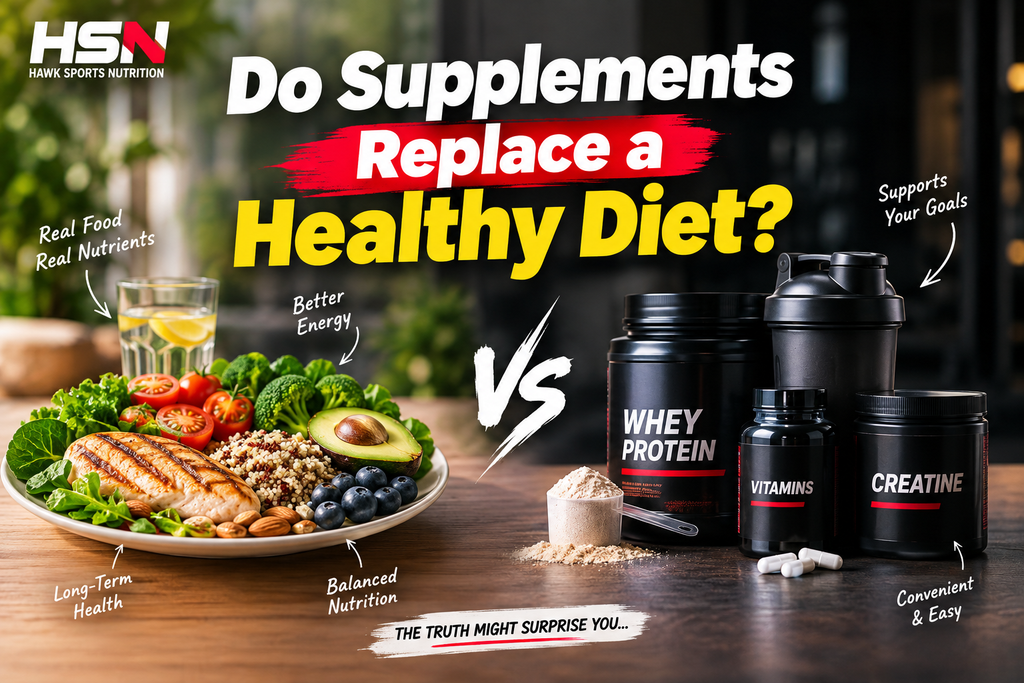
Supplements may have a useful role alongside a healthy eating pattern. A person who struggles to consume enough protein through regular meals might use protein powder as a convenient option.
Similarly, certain people may require specific nutrients because of dietary restrictions, increased nutritional needs, or a medically identified deficiency.
Supplements should be selected according to individual needs rather than simply taking multiple products without a clear purpose.
Why Supplements Should Not Replace Meals
A nutritious meal can provide calories, protein, carbohydrates, fats, fiber, vitamins, minerals, and other components together.
A supplement generally focuses on only a few nutrients or ingredients. For example, a multivitamin may provide selected micronutrients, but it cannot replace the protein, fiber, energy, and variety provided by a balanced meal.
Therefore, Do Supplements Replace a Healthy Diet? Generally, no. The foundation should be a varied and balanced diet, with supplements used when they provide a specific benefit.
Understanding supplements vs healthy diet helps people use supplements as a practical addition to good nutrition rather than as a replacement for nutritious meals.
Benefits of Dietary Supplements
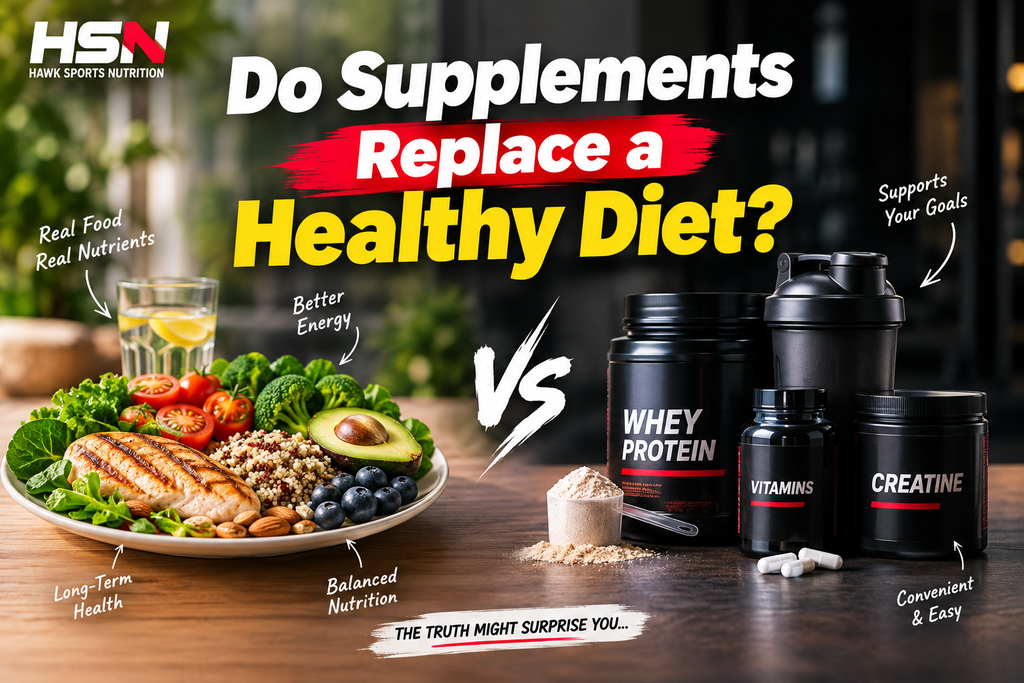
The benefits of dietary supplements depend on what a person needs and why a particular supplement is being used.
Supplements can provide concentrated amounts of nutrients or other ingredients and may be helpful when normal food intake does not provide enough of a specific nutrient.
However, they work best as part of an overall nutritious eating pattern. When considering Do Supplements Replace a Healthy Diet, the key point is that supplements are generally intended to support nutrition rather than replace balanced meals.
Filling Specific Nutritional Gaps
One of the main benefits of dietary supplements is helping address specific nutritional gaps
. For example, vitamin D supplements may be recommended when someone has inadequate vitamin D levels or limited exposure to sunlight. Iron supplements can be useful for people with iron deficiency when recommended by a healthcare professional.
Vitamin B12 is particularly important for people who consume little or no animal-derived food, although individual needs vary.
Supplements can therefore provide nutrients in a convenient and measurable form. However, taking a supplement does not automatically mean that a person needs it.
Nutritional requirements differ according to factors such as age, diet, lifestyle, medical conditions, and physical activity.
Common Supplements and Their Uses
Protein supplements: Whey, casein, and plant-based protein powders can help people increase their protein intake when it is difficult to obtain enough from regular foods.
Vitamin D: Vitamin D is important for normal bone health and other body functions. Supplementation may be appropriate when intake or blood levels are inadequate.
Iron: Iron is essential for producing hemoglobin. Iron supplements are commonly used to treat diagnosed iron deficiency under appropriate medical guidance.
Vitamin B12: B12 supports normal red blood cell formation and nervous-system function. Supplements can be particularly relevant for people at risk of inadequate intake or absorption.
Creatine: Creatine is widely used in sports nutrition. Research has found that creatine supplementation can improve performance during repeated, short-duration, high-intensity exercise when used appropriately.
Supplements Are Not One-Size-Fits-All
The usefulness of a supplement depends on individual nutritional needs. Someone with adequate nutrient intake may gain little from adding unnecessary supplements, while another person may benefit significantly from a targeted product.
Quality, dosage, interactions, and personal circumstances also matter.
So, Do Supplements Replace a Healthy Diet? No. Even with the benefits of dietary supplements, whole foods should generally remain the foundation of nutrition.
Supplements can help address specific needs, but they should complement—not substitute for—a varied and balanced diet.
When Should You Consider Taking Supplements?
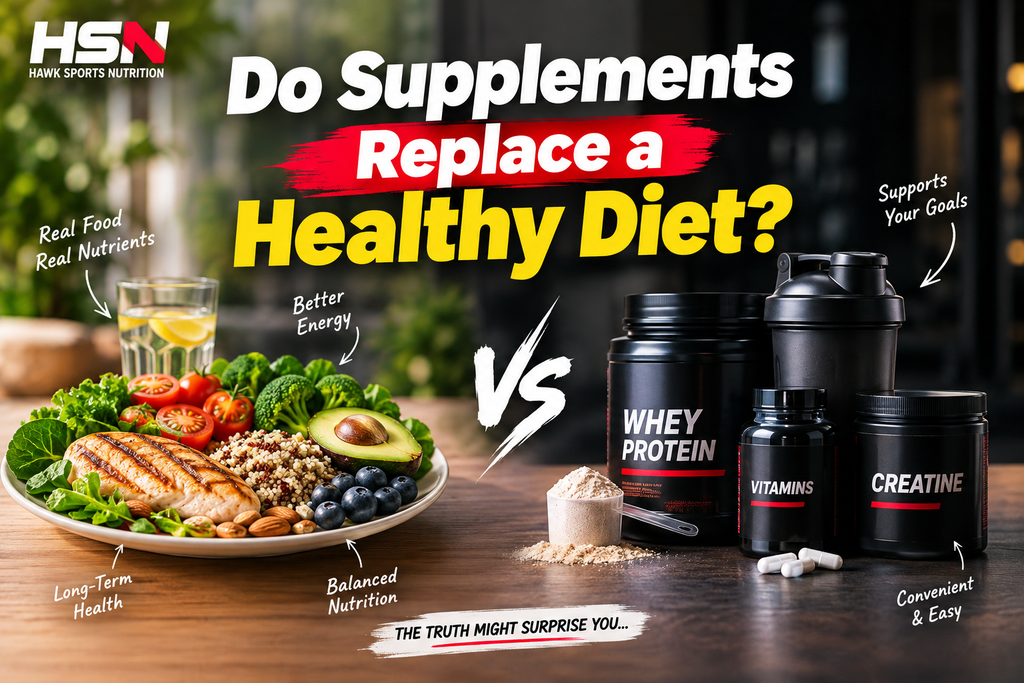
When comparing supplements vs healthy diet, it is important to understand that they serve different purposes.
A balanced diet provides a broad range of nutrients through foods such as vegetables, fruits, whole grains, pulses, dairy, eggs, fish, nuts, and seeds.
Supplements provide concentrated amounts of specific nutrients or ingredients, such as protein, creatine, vitamins, or minerals.
This is why the question Do Supplements Replace a Healthy Diet should be considered in terms of their different roles rather than treating them as interchangeable.
Advantages and Limitations
A healthy diet has the advantage of providing multiple nutrients together, including protein, carbohydrates, healthy fats, vitamins, minerals, and dietary fiber. Whole foods also offer a variety of naturally occurring compounds that may not be present in a supplement.
The limitation is that preparing balanced meals and consistently meeting specific nutritional requirements can sometimes be difficult, particularly for people with busy schedules or restricted diets.
Supplements offer convenience and can help people meet particular nutritional targets. For example, protein powder can make it easier to increase protein intake, while a specific vitamin or mineral supplement may be appropriate when dietary intake is inadequate or a deficiency has been identified.
However, supplements are usually more limited in nutritional variety and cannot reproduce everything found in a diverse diet.
When Can Supplements Be Useful?
Supplements may have a useful role alongside a healthy eating pattern. A person who struggles to consume enough protein through regular meals might use protein powder as a convenient option.
Similarly, certain people may require specific nutrients because of dietary restrictions, increased nutritional needs, or a medically identified deficiency.
Supplements should be selected according to individual needs rather than simply taking multiple products without a clear purpose.
Why Supplements Should Not Replace Meals
A nutritious meal can provide calories, protein, carbohydrates, fats, fiber, vitamins, minerals, and other components together. A supplement generally focuses on only a few nutrients or ingredients.
For example, a multivitamin may provide selected micronutrients, but it cannot replace the protein, fiber, energy, and variety provided by a balanced meal.
Therefore, Do Supplements Replace a Healthy Diet? Generally, no. The foundation should be a varied and balanced diet, with supplements used when they provide a specific benefit. Understanding supplements vs healthy diet helps people use supplements as a practical addition to good nutrition rather than as a replacement for nutritious meals.
Common Mistakes People Make With Supplements
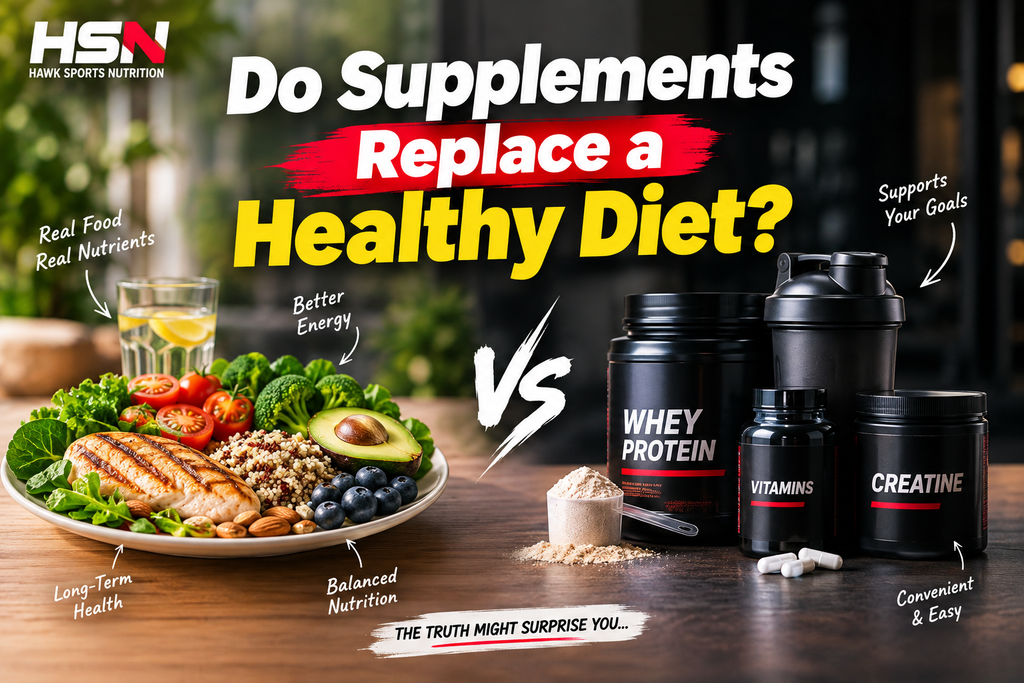
Supplements can be useful when they are chosen and used appropriately, but they are not a shortcut to good nutrition.
Many people make simple mistakes because they assume that taking more supplements automatically means better results. Understanding Do Supplements Replace a Healthy Diet can help people use supplements more responsibly and keep their overall nutrition on track.
Replacing Meals With Supplements Unnecessarily
One common mistake is replacing regular meals with protein shakes, mass gainers, or other supplements without a genuine reason.
A supplement may provide selected nutrients, but a balanced meal can provide protein, carbohydrates, healthy fats, fiber, vitamins, minerals, and other food components together.
Supplements should generally complement meals rather than routinely replace them.
Taking Multiple Products With the Same Nutrients
Another mistake is combining several products without checking their ingredient labels. For example, a multivitamin, pre-workout, and separate mineral supplement might contain overlapping amounts of certain nutrients.
Taking multiple products can unintentionally increase total intake. Reading labels and checking serving sizes can help avoid unnecessary duplication.
Assuming More Is Always Better
Higher doses do not automatically produce better results. Some nutrients have established upper intake limits, and excessive intake of certain vitamins and minerals can cause adverse effects. The appropriate amount depends on the specific supplement and the individual’s needs.
Following the product directions and professional advice when necessary is important.
Ignoring Diet, Sleep, Hydration, and Exercise
Supplements cannot compensate for an inadequate diet, poor sleep, insufficient hydration, or an inconsistent exercise routine.
For people pursuing fitness goals, fundamentals such as adequate calories and protein, regular training, recovery, and hydration remain important.
A supplement should support these habits rather than become the main focus.
Taking Supplements Without Considering Individual Needs
Not every supplement is suitable or necessary for every person. Nutritional requirements can vary based on age, diet, activity level, health circumstances, and existing nutrient intake.
Before starting a supplement, it is useful to consider whether there is a clear nutritional or fitness-related reason for using it.
So, Do Supplements Replace a Healthy Diet? They should not be treated as a substitute for nutritious food. The best approach is to build a strong nutritional foundation and use supplements selectively when they address a specific need.
By avoiding these common mistakes, people can make more informed choices about supplementation and overall wellness.
How to Combine a Healthy Diet and Supplements
Using supplements effectively starts with a balanced eating pattern. Supplements can be convenient for meeting certain nutritional or fitness goals, but they work best when they complement nutritious food rather than replace it.
If you are asking, Do Supplements Replace a Healthy Diet, the practical answer is no—healthy food should generally remain the foundation of daily nutrition.
Build Meals Around Nutritious Whole Foods
Start with a variety of whole foods, including vegetables, fruits, whole grains, pulses, dairy products, eggs, fish, lean meats, nuts, and seeds. Try to include a source of protein, quality carbohydrates, healthy fats, and vegetables or fruit in your meals.
This approach helps provide a broad range of nutrients and dietary fiber.
Use Supplements for a Specific Purpose
Before adding a supplement, identify why you need it. For example, protein powder may be useful when meeting protein requirements through food is difficult,
while a specific vitamin or mineral may be appropriate when dietary intake is inadequate or a deficiency has been identified. Creatine is another example commonly used for specific sports and exercise goals.
Choose Reputable Manufacturers
Quality matters when purchasing supplements. Look for products from reputable manufacturers that provide clear ingredient lists, serving information, batch or quality details, and appropriate labeling. Where available, independent testing or third-party quality verification can provide additional information about product quality.
Follow Recommended Serving Instructions
More is not necessarily better. Follow the serving instructions on the product label and avoid combining several products without checking whether they contain overlapping ingredients.
Certain supplements can interact with medicines or may not be appropriate for people with particular health conditions.
Consult a Healthcare Professional When Appropriate
A doctor, registered dietitian, or other qualified healthcare professional can help determine whether supplementation is appropriate for your individual situation.
This is especially important if you are pregnant, have a medical condition, take medication, or suspect a nutritional deficiency.
Ultimately, Do Supplements Replace a Healthy Diet? No. A sensible approach is to make nutritious whole foods the foundation and use supplements selectively when they have a clear purpose.
When healthy diet and supplements are used together appropriately, supplements can provide convenience while a varied diet supplies the broader nutritional foundation your body needs.
Do You Need Supplements If You Eat a Healthy Diet?
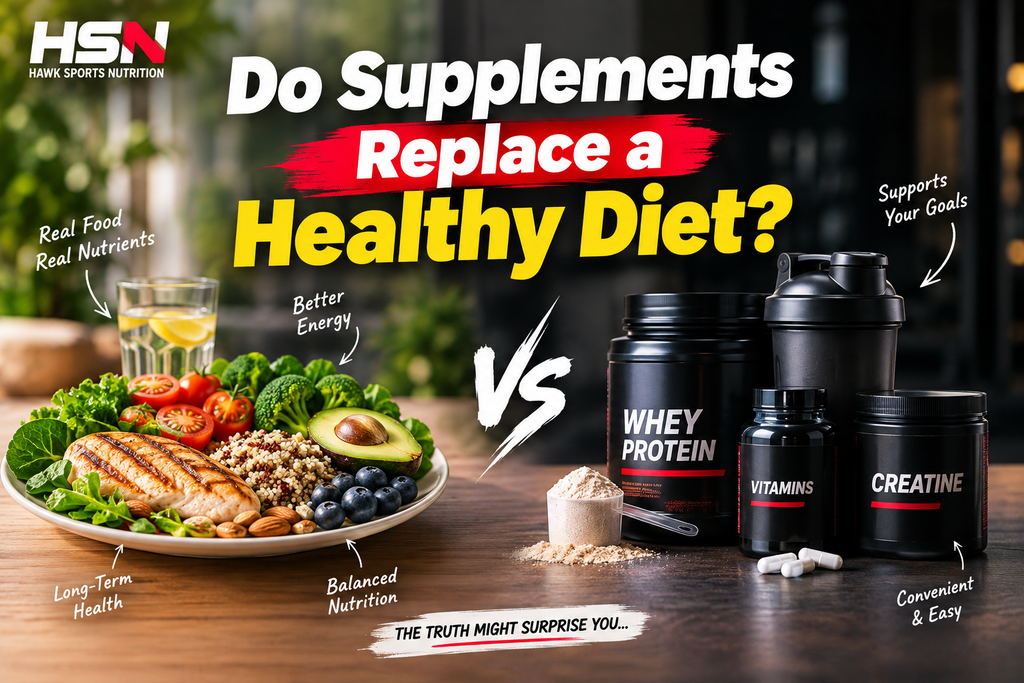
Eating a varied and balanced diet can provide most of the nutrients many people need for normal health.
Foods such as vegetables, fruits, whole grains, pulses, dairy products, eggs, fish, nuts, and seeds can supply protein, carbohydrates, healthy fats, vitamins, minerals, and fiber.
For someone who consistently meets their nutritional requirements through food, additional supplements may not always be necessary. This is an important consideration when asking, Do Supplements Replace a Healthy Diet.
Some People May Meet Their Needs Through Food Alone
A well-planned diet that includes a wide variety of nutrient-rich foods can provide a broad nutritional foundation.
For example, protein can come from eggs, dairy, legumes, fish, poultry, and other protein-rich foods, while fruits and vegetables provide a variety of vitamins, minerals, and fiber.
However, eating a healthy diet does not necessarily mean every person has identical nutritional needs. Factors such as age, activity level, dietary pattern, and individual circumstances can affect nutrient requirements.
When Specific Supplements May Be Beneficial
Some people may benefit from particular supplements even when they generally eat well. For example, a healthcare professional may recommend vitamin D, iron, or vitamin B12 when there is a confirmed deficiency, increased requirement, inadequate intake, or an absorption issue.
People following restrictive diets may also need to pay closer attention to certain nutrients. Similarly, athletes and people involved in regular resistance training may use supplements such as protein powder or creatine for specific performance or convenience purposes.
The key is to match the supplement to an identifiable need rather than taking products simply because they are popular.
A supplement is not automatically beneficial just because it contains an essential nutrient.
Supplement Needs Are Individual
There is no single supplement routine that works for everyone. Two people can eat differently, exercise differently, and have different nutritional requirements.
Medication use, health conditions, dietary restrictions, and laboratory results can also influence whether supplementation is appropriate.
So, Do Supplements Replace a Healthy Diet? No. Even when supplements are useful, they generally work alongside nutritious food rather than replacing it.
The goal should be to build a balanced diet first and then consider targeted supplementation when there is a clear reason.
Understanding Do Supplements Replace a Healthy Diet helps keep supplementation in perspective: food provides the foundation, while the right supplement can fill a specific gap or support a particular nutritional or fitness goal when appropriate.
Final Thoughts on Supplements and Healthy Eating
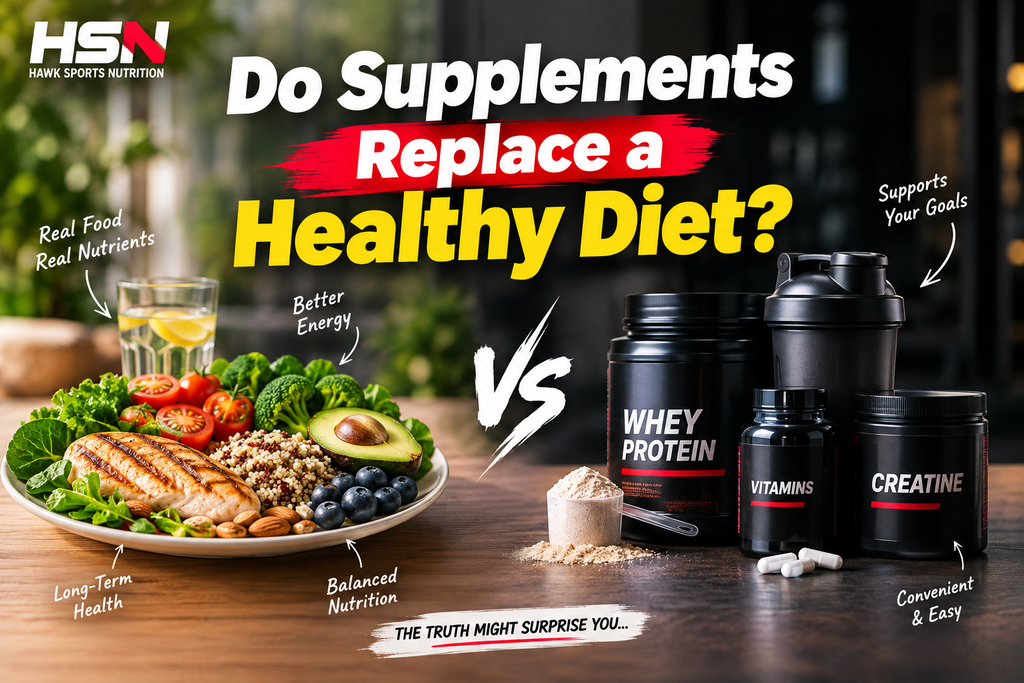
A balanced diet should remain the foundation of good nutrition because whole foods provide a combination of protein, carbohydrates, healthy fats, vitamins, minerals, fiber, and other naturally occurring compounds.
A varied diet that includes vegetables, fruits, whole grains, pulses, dairy, eggs, fish, nuts, and seeds can help support the body’s everyday nutritional needs.
This is why the question Do Supplements Replace a Healthy Diet is important for anyone considering adding supplements to their routine.
Supplements can still have a useful supporting role. Protein powders can provide a convenient source of protein, while products such as creatine, vitamin D, iron, or vitamin B12 may be appropriate for specific nutritional or fitness needs.
However, the usefulness of any supplement depends on the individual, their diet, and the reason for taking it. Some people may need supplementation, while others may already obtain sufficient nutrients through food.
It is also important to remember that supplements are not a substitute for healthy lifestyle habits.
Adequate nutrition, regular physical activity, sufficient sleep, hydration, and appropriate calorie intake all contribute to overall health and fitness.
Relying heavily on supplements while overlooking these fundamentals can create unrealistic expectations about what supplements can achieve.
So, Do Supplements Replace a Healthy Diet? No. Supplements are best viewed as an addition to a nutritious eating pattern when there is a specific reason to use them.
Building meals around a variety of whole foods should come first, followed by thoughtful supplementation when appropriate.
Instead of focusing on taking as many supplements as possible, focus on the bigger picture: eat a varied diet, maintain healthy habits, understand your individual nutritional requirements, and choose supplements based on a clear purpose
. This balanced approach can help you get more value from supplementation without losing sight of the importance of real, nutritious food.
Here’s a concise, SEO-friendly conclusion for your blog:
Conclusion
Do Supplements Replace a Healthy Diet? No, supplements should not be considered a replacement for nutritious, balanced meals. Whole foods provide a wide range of essential nutrients, fiber, and other beneficial compounds that supplements cannot fully replicate. However, the right supplement can be useful for filling specific nutritional gaps or supporting fitness goals when needed.
The best approach is to make a healthy, varied diet the foundation of your nutrition and use supplements thoughtfully according to your individual needs. Remember, supplements can support a healthy lifestyle, but they cannot replace good food, regular exercise, proper hydration, and adequate sleep.